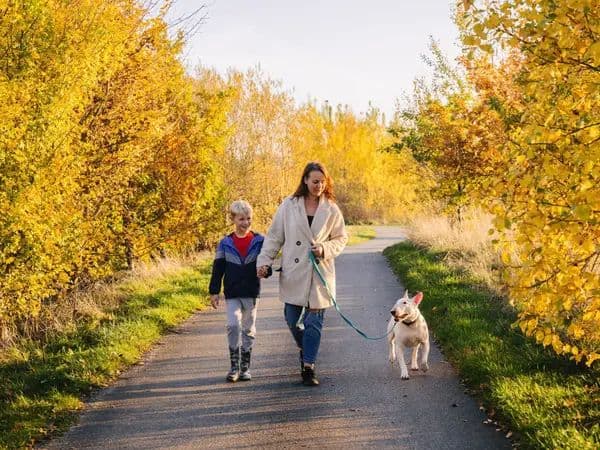

Training · September 10, 2026 · 7 min read
Teaching recall: do not wear out the cue by repeating it
Practice indoors and add distraction gradually. A long line provides safety while the response is still developing.

AVSAB supports reward-based training. To teach recall, begin where failure is unlikely. Say the cue once, move backward a few steps, and reward the dog for arriving. Use a small number of repetitions and finish while the dog still wants to participate.
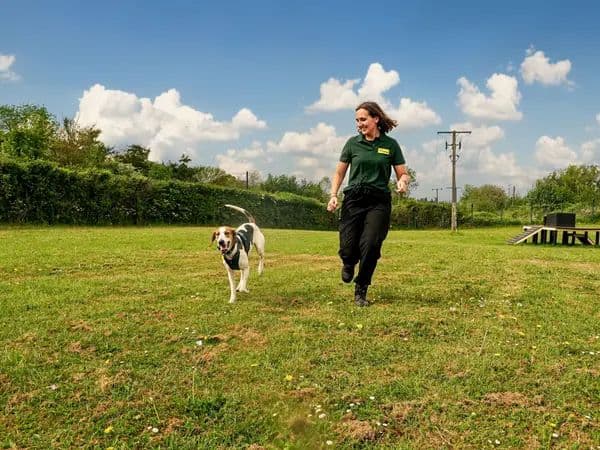
| Cue | Choose one cue and use it once per attempt. |
|---|---|
| Run | Reward with something the dog genuinely values. |
Do not waste the cue when you know it will lose
Build recall in easy settings and on a long line before testing it around distractions. Say the cue once, move backward, and reward generously when the dog arrives. Sometimes release the dog to continue exploring. If coming always ends the walk, the dog learns that approaching makes the good part disappear.
Never call the dog over for punishment or repeat the word ten times. If the dog does not respond, reduce distance and difficulty. Keep a separate emergency cue and practice it sparingly with an exceptional reward. Even strong recall does not replace a leash near traffic, wildlife, or unfenced areas.
Sources consulted
Adapted from AVSAB humane training principles applied to canine recall.