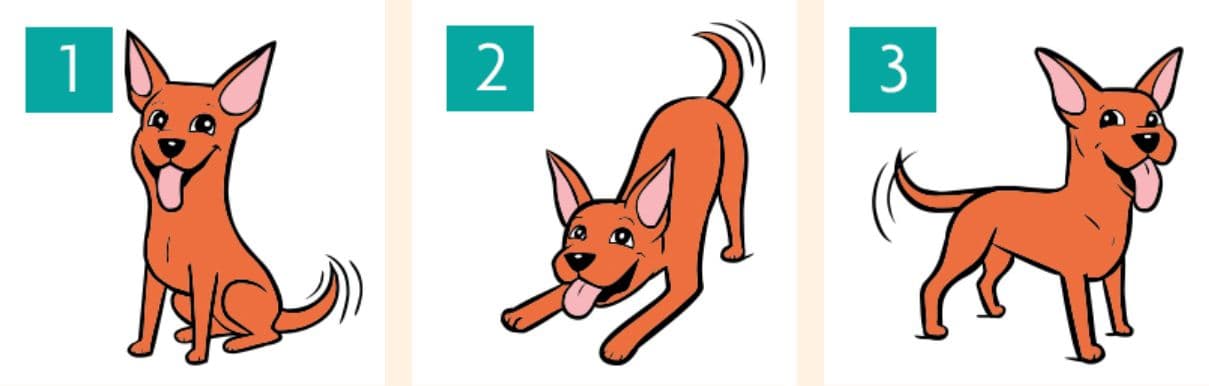

Behavior · October 25, 2026 · 8 min read
Dog body language: learn to see when to stop
Adding distance at the first signals keeps the dog from needing to speak louder. A sudden change may also point to pain.

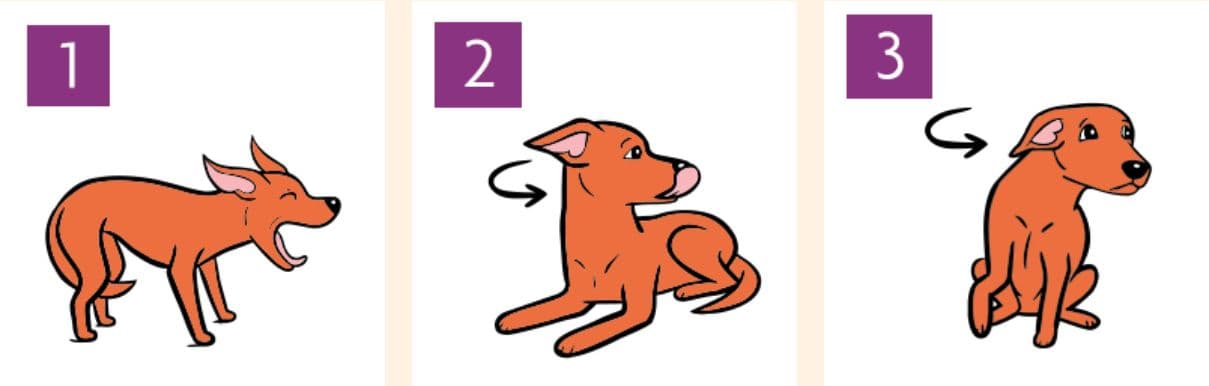
Long before barking, a dog may look away, lick the lips, yawn, lower the body, or close the mouth. One gesture does not explain everything. Look at what happened immediately before it and whether several signals appear together.
| Observe | Read the eyes, mouth, ears, tail, posture, and movement together. |
|---|---|
| Respect | Stop when the dog stiffens, stares, or looks for an exit. |
| Give space | Treat growling as information and reduce the pressure. |
| Next step | Ask about sudden changes or reactions when one area is touched. |
Read the whole sequence
One signal can have several explanations. A yawn may mean sleep or tension. Look at what happened before it, the rest of the body, and whether the dog can move away. A suddenly closed mouth, backward weight shift, side glance, low tail, and freezing together say more than one ear position.
Respond early. Add distance, reduce noise, or end the interaction before barking and biting appear. Respecting a mild signal keeps the dog from needing a stronger one. Record repeated situations and share them with the veterinarian if tolerance has changed because pain can shorten patience.
Sources consulted
Based on RSPCA guidance for understanding dog behavior and body language.
- RSPCA: Understanding dog behaviourRoyal Society for the Prevention of Cruelty to Animals
- AVSAB behavior position statementsAmerican Veterinary Society of Animal Behavior
- AVSAB humane dog-training position statementAmerican Veterinary Society of Animal Behavior
- AAHA canine life-stage checklistAmerican Animal Hospital Association