Comportement · November 12, 2026 · 8 min de lecture
When a dog guards food or toys: create distance
Begin by separating resources and preventing confrontations. Practice trades with low-value objects and never with children nearby.

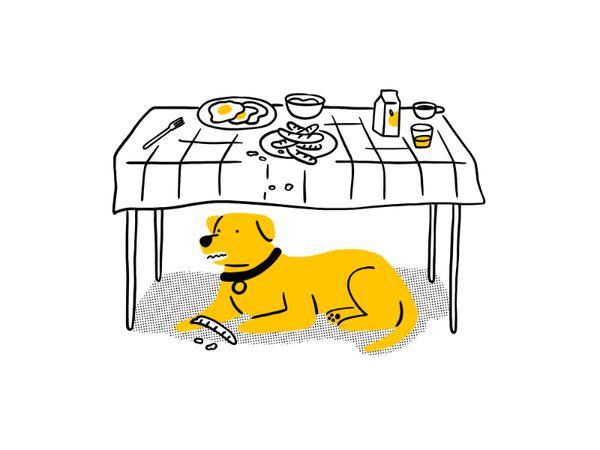
Guarding may appear around food, toys, beds, or stolen objects. It often begins with faster eating, covering the resource, a sideways look, or freezing. That sequence calls for space rather than an obedience test.
| Distance | Serve food and chews where nobody needs to pass. |
|---|---|
| Trade | Avoid reaching into the bowl or chasing the dog. |
| Consult | Practice voluntary trades with higher-value rewards. |
| Étape suivante | Seek help for lunging, bites, or intense stiffness. |
The MSD manual includes resource-related aggression among behavior problems that need careful management. Punishing a growl may remove the warning while the dog's concern remains unchanged.
Stop testing how much the dog will tolerate
Taking the bowl away or putting a hand into it can teach a dog that people predict loss. Give space and trade objects for something better. Feed animals separately and remove leftovers before opening barriers. Teach drop with low-value items, without chasing or wrestling.
Do not punish growling. Treat it as information and change management. If the dog guards several resources, blocks spaces, has made tooth contact, or lives with children, consult a veterinarian and behavior professional. Pain, hunger, and competition can intensify guarding and require different responses.
Sources consulted
Based on the MSD Veterinary Manual review of behavior problems and resource-related aggression.
- MSD Veterinary Manual: Behavior problems in dogsMSD Veterinary Manual
- AVSAB humane dog-training position statementAmerican Veterinary Society of Animal Behavior
- AVSAB behavior position statementsAmerican Veterinary Society of Animal Behavior
- AAHA canine life-stage checklistAmerican Animal Hospital Association